(Sometimes the subtitle is a lie.)

I Wander....


Places I've stumbled upon recently:

Sometimes you'd like to leave a message - to yourself, the world, or a group who have the password. A message that'll last a week, a month, or however long you need. And available pretty much anywhere - online, in other words.

TinyPaste.com - halfway between blogging and email.

Wikipedia is sometimes wrong. Conservapedia is always wrong, about everything - including its own reason for existence. Uncyclopedia is deliberately wrong about everything, and wikiality sounds right...but only to morons.

The Less-Wrong Wiki knows how to be right.

If you like XKCD...you'll probably already read Abstruse Goose.

Daily Science Fiction short stories, to your inbox.

Good books are good. Bad books are everywhere. But only OddBooks are fun.

Auto


It's an automatic world.

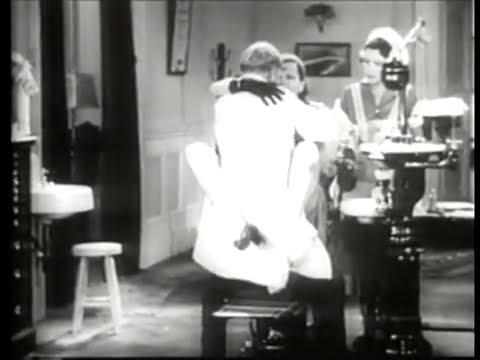
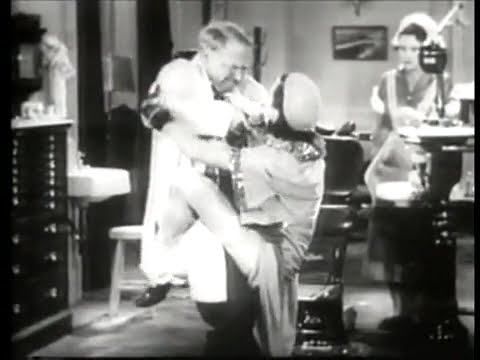
A few months ago I set up a spare laptop to automatically record random frames of TV shows. I came up with some captions, which I used a keyboard scripting program to automatically resize and frame the pictures, and automatically put the captions underneath.

Now I'm going to use another script to automatically schedule each picture in turn, for blogger to, erm, automatically publish.

Sometimes there's nothing to do except spend hours figuring out how to give yourself slightly less to do. Some things at least you can't yet have your computer do for you....


Dumb, Da Dumb Dumb


Why are people such fuckwits?

Or, a better question: Why are people who really shouldn't be fuckwits...still fuckwits?

Last week I went to a job interview. The business owner is a self-made multi-millionaire who's spent a million of his own pounds in setting up a small college.

You might think a successful businessman would know better than to trust the first self-proclaimed management consultant who walks through the door and tells him he needs to employ several extra layers of management...before employing any staff who do the actual work.

Or that he'd think twice before rushing out to buy a hundred obsolete laptops on the word of a family member.

You might think he'd check that there are already dozens of places locally that offer courses in accountancy, IT and Business English - cheaper and with more resources than he can offer.

But no. If being in touch with reality helps you make a success in business, then being a success in business insulates you from reality.

I only hope the college runs long enough to pay me - before selling off all the expensive new equipment bought for its enormous empty classrooms.

I was one of six interviewees - one of two without PhDs, and the only one not applying for a managerial position.

Can you explain how a room of men with doctorates, who want to work for a place that plans to teach arabs and asians, can spout the same racist bullshit as the gutter press?

Apparently there are too many (whatever that means) foreigners (meaning non-caucasians) coming into "our" country to "steal" "our" jobs.

And they dilute (whatever that means) the true british culture (whatever that is) with their strange foreign ways (which is a Bad Thing for some reason).

How can someone spend years in other countries, learn the languages, and stay in education long enough to get a PhD...and come out of it spouting xenophobic isolationist horsecrap?

When I catch myself being stupid, I do something about it. I've no idea who I could have picked that habit up from, because no one else seems to do it.

Foreward Planning


The university are doing a music festival - a week after half the students have gone home for the summer.

It seems the organisers forgot to arrange bands to play. This is normal. So today - two days before the gig - I got a slightly begging circular email asking if anyone was in a band and could play Friday.

Well, I was in a band a few months back - we formed to play fundraising gig which also had a performer related scarcity problem. But I've still got the backing tracks, and my musical better half (the talented one who sings and plays guitar) still has his chord notes...somewhere.

We've got seven songs - half an hour's worth of material to ruthlessly squeeze into a 45 minute slot. We just don't know which slot.

And no time to rehearse. Or indication so far whether there's any other bands playing.

Oh, and the singer/guitarist has a stinking cold - but wants to play anyway. I have a dental appointment on the same day, so hopefully I'll be able to feel my mouth again by the time I have to, erm, use it.

Oh, and they've arrange the gig for the afternoon when a lot of the punters can't come because they're working.

UPDATE: Okay.

My musical better half has a really bad cold, so has dropped out. This leaves me with three songs I can do on my own - call it a twelve minute set.

And most of the bands either still haven't confirmed, or word of their confirmation hasn't filtered through to all the groups sharing/competing in the organisation. As I write, the 'festival' is due to start in six hours.

And I've been politely discouraged from performing on the, um, considerate grounds that I'm under-rehearsed so might make a mistake and get upset about it.

So I'm going to be a rat...and leave this particular sinking ship.

UPDATE 2: One final (?) cockup.

I've played a gig where the orgainisers didn't know how many bands were playing. I've played one where they didn't decide on the running order till the night. I've played several where bands didn't turn up - including one where it was the headlining band.

Now there's been one where they didn't know what week they've booked the room. Because it's not this week - it's next week. Gah!

UPDATE 3: Next week, my talented colleague...isn't in the country.

Three Stories (Part 3)


Blogger seems to be working again, and I have a phone.

Actually that's not quite true - I have a pocket sized device that plays mp3s, tunes to FM radio, works as a dictaphone, personal pager, organiser, alarm clock, text viewer, stills camera, video camera, miniature cinema and tetris-player, which also occasionally takes phone calls.

Actually that's not quite true either, because I've got two of them - one never used. The other one lives in it's box on the shelf, with charger, earphones and (because it's a Motorola) a vast array of socket-converters because (being Motorola) most of the connections are non-standard. But it was cheap and not as non-standard as the Samsung.

And that's the flipside of organising your life around a small, inexpensive, convenient, multipurpose device. If you want your life to stay organised when it dies, you need to defeat the point of a cheap all-in-one device by doubling the cost and halving the convenience - and get two of them.

These ruminations were triggered by Blogger going down for several days. I wrote them on the assumption that I'd be able to post them when it came back up.

Not if, when. Because I may be a cynic about technology and a pessimist about how humans live with it, but I still have faith that it's a good thing, that it will in general work properly, and that when it doesn't, I won't have to wait long for technicians like me to make it go again.

And like all faith, it doesn't make much sense when you think about it, but even when you realise that, you still have it.

Three Stories (Part 2)


I've been given a laptop, and Blogger has now been down for 36 hours.

I have a friend who bought a laptop two years ago. It's an AMD dual-core 2.11 GHz with a 230GB SATA drive and an x48 DVD-/+R DVD writer. All of which is prominently displayed as a selling point, aimed at customers who don't know what any of it means.

It has a design which could be called 'horrible' if you're an artist, 'impractical' if you have to use it, and 'retro' if you're a journalist. 'Retro' used to mean '20-50 years ago' - now it's 'the cutting edge of two years ago'.

It has AHCI (Advanced Host Controller Interface), which depending on how you look at it, means either it's optimised to run Windows 7 (whatever that means), or you need to switch the AHCI off to install any other operating system.

It also has a sticker marked "Windows 7 Compatible", Windows 7 pre-installed...and absolutely no way to fix Windows 7 when it goes wrong. Which it did.

That's Windows 7 all over. It's great at diagnosing and fixing its own problems, until it reaches the limit of its self-repair ability, at which point you're royally screwed. A disc for reinstalling Windows would be the easy and obvious solution - but none is provided, the assumption being that Windows 7 will never need any user maintenance.

Which is why my friend couldn't reinstall Windows, which is why they spent two weeks wages on a new laptop (with near-identical specifications but a non-retro design), which is why the old one is, in their words "scrap - it's yours if you want it". Which is why I have it. It's now working perfectly.

I once knew a man who sold his car because he couldn't get 'the smell of sex' out of the seats. I'm not sure how I should feel about that, being a contributor to the smell, but it did seem odd to spend a month changing cars instead of an afternoon washing (or even replacing) the seat coverings.

You don't throw away your coat because there's a hole in the pocket - you either mend it or use the other pocket. You might throw away your mattress if it starts leaking its stuffing - though mine is patched up with gradually increasing amounts of duct tape, and fulfills its function just fine.

Televisions are difficult and expensive to repair, so it actually does make sense to replace them when they stop working. But it's pretty simple to upgrade your laptop's hard drive or memory, plug in a USB keyboard when the onboard one gets unreliable, and reinstall the operating system when it falls over.

They're just not presented that way to the public. Personal computer development has slowed to a crawl, which means your new laptop won't be much different to your old one - but you get the new one because you're under the impression that you can only upgrade (or indeed repair) by replacing. And that small upgrades are really big ones.

A decade ago you could expect speed to double every year, now every few years you get the number of processors doubling, running in parallel at the same speed as the old ones - which is useful if you have the minority of software that can take advantage of it.

You may have 500GB of drive space instead of the 250 of five years ago, but it still accesses at 7200rpm. USB 3 may be available, but most of the devices in the shops still use USB 2.

I'm always happy to have an extra laptop. The one from my friend spent last night sitting in one corner making data backups, while this one rendered text-to-speech mp3s and ran a script to downloaded every episode of Monty Python from youtube in sequence, while I dozed on the taped-up mattress.

My old laptop is set up for general purpose email, browsing and wordprocessing. I lend it out to people whose laptops have gone wrong, to use while they're shopping for new ones.

Three Stories (Part 1)


As I write this, Blogger has been down for 48 hours.

You wake up in the morning, blearily stagger downstairs for some breakfast, flick on the kettle...and instead of a cup of morning coffee you get a loud crack, the smell of burning, and resolutely unheated water.

It's annoying, it's inconvenient, it probably means a trip to the electrical shop to get a new kettle, but you don't sink to the floor, wailing and ripping out your hair.

Instead, you grumpily punch the TV remote - because you've got a television in your kitchen that you only use for watching the morning news and the evening news while waiting for the microwave to go ping and the kettle to boil.

On the news is a story about how the local roads you drive down most days are blocked with snow. Again, it's annoying and inconvenient. Your plans for the day - maybe the week - could just have been scuppered, but once again you don't have a nervous breakdown and you don't join a doomsday cult.

Then while drinking coffee made with water boiled in a saucepan and listening to the radio news, you check your email. Or you try to, but you keep getting a cryptic numbered message about 'connection timed out' or 'unable to connect with server'.

So what do you do? Shrug and go do something else? Make a mental note to try again later? No, you keep pressing the button, trying to download the overnight spam and facebook chatter.

You realise you feel...lost without your virtual connections. Cut off, alone, disconnected and trapped in a suddenly claustrophobic world. You keep clicking the mouse, thinking the failed connection must be some silly mistake about to be immediately rectified. For the next ten minutes you're stuck in a circuit of the same actions, like a robot stuck in a logic loop.

And besides the lost feeling, there's a kind of blustering anger. Because this kind of thing is just not good enough. You pay your ISP to keep you connected at all times, and obviously the technicians in the big shiny computer centre aren't doing their jobs because it's been, like, half an hour and they still haven't fixed whatever the problem is.

Yes, it's that combination of existential panic and ranting outrage. That mixture of emotions that doesn't come from the weather re-arranging your timetable, or a cheaply manufactured household implement breaking. It's the attitude reserved for some personal technology, and in particular personal computers.

It's 0800 13/05/11 as I type, and Blogger's messageboards are overflowing with threads like 'When will Blogger be back up & running?', 'Why has Blogger been disabled for 7+ hours today (5/12/2011)? This is unacceptably sh*tty service!' and 'WOW this LONG down time! Will Blogger be discontinued?'.

Shouting, threats, namecalling, and not a little paranoia. Some are posting to say if the outage lasts one more hour they'll never use Blogger's services ever again. Others are ranting that Blogger's technicians haven't posted an estimate of how long it'll take them to find and correct the problem - because everyone knows techies have precognitive superpowers.

* 'Why no further updates as to when service will be restored?'
* 'Is this all problem with Friday 13?'
* 'We Should Have Been Warned'
* 'Why do you refuse to give an ETA for restoration of Blogger service?'
* 'Being terrorist attacked? I'm losing my readers!'

This is the modern attitude to the internet and home computers, or rather to their failure. A combination of existential horror that something fundamental and unquestionable - our virtual selves - has suddenly been cut off, and outrage the situation hasn't been immediately remedied by the authorities. Panic, and affront that the universe has dared to do this to us.

If we can't make a phone call because our mobile phone is out of range, it's an irritation and maybe a serious practical problem, but it's not like a crisis of faith. If we can't post to twitter from the same device and for the same reason, it is a little like you're a young child with a normally dependable parent, suddenly left alone and without explanation in a big empty field.

We don't even expect our gods to be on call 24/7/365 - and we meekly accept when they don't answer our prayers. But even though we know intellectually that our technology is far from omniscient, omnipresent, reliable and obedient, we still expect more from little black boxes than the creator of the universe.

...in the woods?

I've been busy. But not the kind of busy that goes on blogs.

Even highly technical blogs don't give you detailed accounts of the several ways the writer failed to solve a problem - which in a way is a shame, because others reading it might like to know what approaches to avoid.

But if there's one thing less interesting than someone else's success, it's someone else's failure.

I eventually did solve all my problems, which were:
* How to set up a computer to automatically record a series of movies.
* How to turn a series of ebooks into a series of talking books, using a text-to-speech synthesiser that doesn't produce totally unlistenable output.
* How to generate nonsense lyrics and chord structures semi-randomly as a way to spark creative songwriting. I'll write about that one when I've got the strength.

There was also a little short story about family values.

So, I now have a growing set of subtitled classic/sci-fi/action movies with subtitles that I can show to my students (when I finally have some) instead of getting them to play stupid games all the time that supposedly help them practice their English.

I also have a set of mechanically produced talking books on my mp3 player, broken up into half hour chapters, to be played when I'm doing nothing but walking from part of town to another.

Ah, but what are the books? Harry Potter? American Psycho? How to Win Friends and Influence People?

Not quite. The acknowledged classics of marxist philosophy! Not marxist economics, not marxist history, not even marxist politics - rather, the works of Engels, Lenin, Plekhanov etc, which (so I've been assured) founded the uniquely marxist view of the universe.

I thought, seeing as I'd been calling myself a marxist for over a decade, and originally got interested in it for the philosophical aspects, which have proven elusive and baffling, I ought to read the great books. Or at least have my phone read them to me in the voice of a BBC newsreader.

And I have to say, the more I hear, the less impressed I get. Today, Frederich Engels told me that absolute zero temperature is a contradiction in terms. Yesterday it was how calculus and the irrational value of Pi can't exist - and all those silly experts who disagree just don't understand.

Don't worry, I won't be boring you with my metaphysical deconstructions of German political activists from 150 years ago. Though I have been writing essays about it, and they'll probably get a blog of their own.

But here's a non-philosophical essay which dropped out of my head a few days ago. If you've had involvement with any kind of political group, it may describe something familiar.


Is the Pope Catholic?


How many socialists believe in socialism?

Put it another way: How many committed socialists are committed to the cause of socialism (however they conceive it), and how many are committed instead to their particular party? Or to their role within that party? Or to their career within that party? Or to the party's leadership, the support network offered by likeminded comrades, or the sense of struggle?

How many would know what to do if the struggle succeeded? Indeed, how many care more for being the scrappy underdog than the vanguard of a new world?

It might seem a self-evident contradiction to say that most catholics believe in god - surely belief in god is the absolute desideratum of being a catholic?

The average practicing catholic believes in the teachings of the church and the word of the scriptures - even though they're rather vague on what the church actually teaches, and their bible probably sits unopened but prominent on their bookshelf.

The priest will have been through seminary, learning exactly how vacuous the theology is - and how to cover up that vacuity with platitudes and impressive-sounding nonsense. By the time they graduate, what faith they have remaining tends to be so rarefied and abstract it serves only to give them the assurance that they still have a faith.

Around half those who qualify for the priesthood don't enter it. Those who do, in honest moments confide to discreet friends that they believe more in the social good the church can do, than in the reasons it gives for doing it. That, and they don't have many other career options.

Professional theologins are often more able to be open about their faithlessness, while the deacons, bishops and arch-bishops are obliged to keep it firmly closeted.

It's a Kafkaesque world where those who believe don't know what they believe, and those who lead do so on the condition they never admit what they don't believe.

Socialism isn't a religion, but it is a church - complete with sects, schizms, heretics, plaster saints, holy songs, failed prophecies and a host of false popes.

There are also the lavishly published but largely unopened founding texts, and the few professional interpreters who can justify any action, any theory and any reversal by quoting them.

When we see our leaders making impassioned speeches for courses of action we later learn they oppose in private, when we see petty personal feuds disguised as serious theoretical debates, I think we can be forgiven for suspecting the higher you get in the organisation, the less you care about its alleged cause.

When we see apparatchiks barefacedly flipping policies (and lying that they've ever changed) to gain favour in the hierarchy and climb another rung - before opportunistically defecting to another party, effortlessly swapping loyalty after sometimes decades of work...I think we're justified in asking how they so easily rearrange their principles - and if they have any left.

So, is the pope catholic? Perhaps he can't afford to be.

The Big Day


There's a familiar pattern, which cognitive psychologists know all about.

1) Decide to do something.
2) Make some preparations.
3) Realise it's a terrible idea.
4) Feel compelled to go through with it anyway.
5) Convince yourself it's a good idea, somehow.
6) Do the thing.
7) Realise again it really was a terrible idea.
8) Convince yourself it was a success after all, or if you can't do that,
8a) Blame someone.


It works on an individual level, but also with families, workplaces, and entire nations. The royal wedding gave us lots of examples.

Nationally, it looked like this:

1) The world's in recession, our mid-eastern allies are all being topped, and everyone hates the government - what we need is a big state occasion. Something sentimental, nationalistic and happy - something shiny to distract the little people. How about a royal marriage? It worked last time.

2) Find a royal with a girlfriend, and persuade them to get hitched. Announce it, and wait for the nation to rejoice.

3) Realise the public don't much care. They're not even using it as an excuse for a street party.

4) Hide your annoyance at the plebs.

5) Get the independent, objective media to push the wedding hard. Solid coverage for a month. Hopefully, a few weeks of being told everyone's ecstatic about the wedding will persuade everyone they are ecstatic. Waive the rules on organising street parties, hoping it'll motivate people to have them.

6) Have the wedding. Make it look really plush and don't mention the cost - or that anything else is happening in the world. Find a dozen crazy people who camped out in London to see the procession, and interview them incessantly as vox pops.

7) Grit your teeth to make the best of a bad deal.

8) Continue the blanket coverage, now in retrospect. And/or,

8a) Blame the politically correct student radical types for spoiling it for everyone else.


Here's how it affected my life:

1) My street has an annual party - with barbecue, raffle, and a few dozen people trying to remember each other's names from the previous party. The organising committee - chaired by my esteemed father - were thinking of not bothering this year. But seeing as there was an excuse this time, they decided to go ahead.

2) Put invitations through all the letterboxes. Dig out the home made wine.

3) Note the growing list of names who had other things to do on that day - including two who'd been asked to unblock a relative's drains that day.

4) Decide it's more trouble to cancel than to press on. Don't explain how.

5) Get some cheap plastic flags and patriotically decorated paper cups - just to make it royal themed.

6) On the day, turn up, eat too much, drink too much, and make light conversation with virtual strangers.

7) Take home most of the food and have it for your evening meal.

8) Say things like "That went as well as could be expected" and "At least it didn't rain".


And so, on the occasion of whatshisface marrying whatshername, here's a picture summarising everything it meant to me:


Review: Jitbit Macro Recorder


Computers are good at repetitive, mindless tasks. The kind that require great precision and patience but no imagination or choices. Exactly the kind which humans are no good at, and make working life unbearable.

Half the point of technology is to do away with that kind of drudgery. The other half is to help us do the things we did beforehand, but faster, better, or just more.

All of which is a bit odd really, because most of the things we do sitting at a computer are repetitive, mindless tasks that require great precision and patience but no imagination or choices.

The tedium of adding up a column of figures with a pencil has been replaced with the tedium of typing in a much longer column of figures, which are magically totted up by the spreadsheet.

If only there were some program which could watch you do some thankless task on another program, once, then do the same thing, much quicker and without errors for a thousand iterations, while you go and do something interesting. Probably on another computer.

Well, there are such programs. And while they can't transcribe your handwritten notes or turn them into the polished prose of the novel you're trying to write1, they can record your keyboard and mouse actions, help you fine tune them, and play them back in a loop.

The one I use at the moment is called Axife Mouse Recorder, and it's free demo. I can't register it to get the full version because...the company I'd register with is long bankrupt. But it's still one of the most popular programs of its kind because, frankly, it's very good and most of the competition2 is rubbish.

There are a few good alternatives though. vTask is much more configurable, and its free little brother TinyTask (also in portable version) is great for quick-and-dirty task automation3.

I'm going to be looking at the Jitbit Macro Recorder, to see if its longer feature list and user friendliness are enough to make me switch from my trusty but crippled Axife demo.

Jitbit, incidentally, have an innovative marketing strategy, whereby if someone with a blog reviews their program, the blogger gets a free personal-use licence for it. Good idea isn't it?

Now, I'm working on a project at the moment where I've got 466 text files containing numbers describing the shape of different sound waves. Each wave has 1778 points, and I need to open each file in turn, transcribe every point into another program, then save the result, and move onto the next file.

I've recorded a script in the Axife program, and the first screenful looks like this:


Now here's the same series of operations, recorded in JitBit Macro Recorder:


Both programs can record mouse movements, mouse clicks and keyboard activity, but for both I've recorded only the latter two. In effect, the mouse pointer will jump instantly to wherever it's needed, and any actions like selecting text, copying and pasting are done with the keyboard.

I've also edited the scripts so the delays between keypresses are much shorter than humanly possible - though I need to introduce delays occasionally for things like filesaving, so the computer can keep up.

Removing (or not recording) mouse movements and minimising delays means one wave takes about six minutes to transcribe - and all 466 should take about 40 hours.

At a rough calculation, it would take me about 1000 hours, working nonstop to do the same thing the old fashioned way. That's not just a bigger task - without automation I wouldn't even consider trying.

The other thing to notice is: I've put loops in the scripts. The most important one is a single copy-and-paste from a line in Windows Notepad to a corresponding point in Propellerhead Reason, looped 1778 times4.


So, what are the things I prefer about Axife, what do I think is better in Jitbit...and what's missing (so far) from both?

The Axife display is neater, more compact, better thought out. The delays don't take up a whole line, and the mouse click details easier to interpret as a gestalt.

The basic script editing facilities are the same between the two - move, cut, copy, paste, change event type and change co-ordinates. But Jitbit has a load of extra things you can do.


You can open and copy files directly, switch between windows and wait for them to close before moving to the next event - though unfortunately it doesn't seem to work with DOS windows, so you can't run a series of batch files in a row.

You can launch websites, play macros within macros, pause to ask for user input and perform various clipboard operations. All things I wouldn't use often, but it's good to have them.


But here's the big one. Your macro is no longer limited to doing the same thing over and over again - it can branch. It can make decisions - if a file exists, if the clipboard contains certain text, if a process exists or a window's in focus, if the user inputs this string but not that string....

You've actually got a simple programming language, which means you've got the option of a complex, context sensitive macro. With some ingenuity, you can even make it pick up on whether something's gone wrong - so it'll exit instead of trying to copy from the same non-existent window until you stop it.

There's other things too. If the button you want to click has moved, there's a 'Smart-Rec' feature to find it. You can put labels and comments in your script - useful because all but the simplest get very confusing.

Which leads me to thoughts of what could be better. When you look at a raw, newly recorded script, it can be baffling - even though you've just done the operations which it shows. Does this mouseclick refer to this window or that one? Is that click a window focus or a data selection? Is that copy operation the one for the third block of data, or the filename? Is this where the loop should end?


It would be much easier if I could press a hotkey while recording, type in a label to describe what I'm about to do, then press the key again, and continue5. A kind of writing notes in the margin to yourself, for when you come to the editing.

Some macro recorders have little to recommend them except the ability to do arithmetical operations on data before pasting it. Strangely, Jitbit can't do that, so I'm left pasting data into Windows Calculator or Excel, then copying the result. On this point the similar vTask pulls ahead in the race.


Finally, it would be a lot neater to have the option to display common keypress sequences as operations. Instead of four lines showing 'Hold CTRL', 'Hold X', 'Release X' and 'Release CTRL', just have a line showing "Cut". Even reducing 'Hold Enter' + 'Release Enter' as 'Enter' would help readability and reduce clutter.

In principle, you could make your own shortcuts like these with the 'Goto' or 'Play Macro' commands, but I'm looking to make macros quickly, not spend hours on workarounds to make them tidier.


So, have I been persuaded by Jitbit's Macro Recorder? I think I will use it, but not exclusively. TinyTask is still good for taking a few seconds to make basic macros, Axife occupies the middle ground, and if I'm working on a complicated procedure involving several different programs in sequence (my personal record, by the way, is seven) then Jitbit's Macro Recorder will be invaluable.


1 At least, not until laptops come fitted with robot arms for turning pages and moving webcams around. If they ever do, your computer will be able to read you bedtime stories from a real book.

2 It's a crowded market. A quick google search gives the high end products like Ranorax Recorder and WinAutomation, plus dozens of basic free or shareware ones like Mouse Recorder, Advanced Key And Mouse Recorder, and Mouse Recorder Pro, and autoclickerextreme - which probably wins the prize of Most Ambiguously Suggestive Name.

3 I've got an old tower PC with an even older video capture card, plugged into Film 4 on an old Freeview box - recording...old films. I tried for a week to get the PVR software to work properly - now I've got ShutDownExpert running two EXE mouse control scripts - one to activate VirtualDub to start recording, the other to stop it. It's clunky, but unlike the software designed for the task, it works.

4 The screenshots for this review were converted to JPG using photoshop...automated in Jitbit's program. While I poured another cup of tea.

5 I don't know of any programs which do this, but it would seriously help the editing process.

Nox


I don't believe dreams mean anything - except in the general way they reflect your attitudes and life experiences. They're just a grab bag of half formed ideas and feelings floating around in your memory, loosely tied into a sequence of events.

A kind of screensaver for when your operating system is in standby mode. Put it another way. Dreams can have significance, but not signification.

In the dream I was in some sort of institution, with Dickensian architecture but modern (though underfunded) facilities - it provided care for children who'd been abandoned or abused. I didn't work there and I wasn't a child but everyone who worked there knew me.

There were two young children, both boys, age about 9 to 11. I somehow took to caring for them - essentially babysitting. But it was night time, and the rooms, stairs and corridors of the institution were dark, so I couldn't seem them very well.

And because I couldn't see them, I couldn't be sure they really were human children. I spoke with them and we conversed, I did what I could to make them safe and comfortable. I carried them around from room to room, even carrying one to the top floor for a medical checkup. The doctors there knew me and greeted me as they went about their rounds, appreciating that I'd taken the trouble.

But in the dim light and silhouette, one of the boys looked like...it looked like I was carrying around a stack of old, heavily bound books. And the other...looked like he might be a small hairy animal, possibly a dog, or a chimpanzee.

They both spoke like children, and that's how I treated them. I loved them, and cried when I thought we might be separated and maybe they come to harm. I was always carrying one in one arm, and holding the hand of the other as we walked - sometimes swapping. We hugged closely as we moved around the rooms and stairs.

I'm not sure whether they had names, but the emotional connection was intense - full of concern and, well, love.

Then daylight came, and I could see clearly. Both were what I'd thought and hoped - normal, healthy, happy children. The 'dog' boy was absorbed playing alone on a pile of beanbags. The 'books' boy was chatting and relaxed with three friends his own age. I spoke with him, but it was now awkward, because the night had passed and he didn't need my help anymore.

They didn't want to hug, or be carried around, or even talk. They had no trouble letting go of their dependence on me, and though I was relieved that I could now see they really were what I wasn't sure I'd been taking care of...I didn't want to let go of them.

And that's when I woke up.

No, dreams don't mean anything. And to prove it, when I went back to sleep, trying to continue the dream, I was now an invisible observer, watching a frustrated investigation into some kind of bureaucratic coverup which involved 'losing' the boy's records.

Oh, and the investigator was...Captain Jean Luc Picard. Bald, starfleet suited, and with a nice line in righteous speeches. The bureaucracy offices were all futuristic rounded white cubes and the data storage computer looked like a giant metal cactus.

I'm quite sure none of that meant anything.

Less than 100


Some films are more praised than enjoyed - think Citizen Kane, The Cabinet of Doctor Caligari, and probably everything by Charlie Chaplin.

Others are more referenced than watched - The Thomas Crown Affair, Tron, possibly Dr No...and The Human Centipede.


Full title The Human Centipede: The First Sequence, it's the first in a projected trilogy of escalatingly gory films united around one idea: Mad scientists kidnap young innocents to surgically attach them mouth-to-anus in series. In other words, it's about being forced to shit in each other's mouths.


Now I've finally watched it...and I'm not sure what to make of it.

The plot is fairly straightforward. Two American valley-girls (Lindsay and Jenny) are touring Europe when their car breaks down in the middle of a creepy forest in the rain at midnight. So as is traditional, they go searching for an isolated house with a telephone.

The house is owned by a wealthy retired surgeon (Josef Heiter) who specialised in separating conjoined twins - but now has the opposite surgery in mind. He rohypnols the girls, euthanises a previously kidnapped trucker because his 'tissue is incompatible' with theirs, and goes out to kidnap another tourist (Katsuro).


Lindsay makes a failed escape attempt, prompting Heiter to decide she should be the middle section. The youngsters wake to find the surgery completed, and a leering Heiter.

The good doctor tries to housetrain his new pet, which he obviously intends to replace and upgrade his previous experiment - his beloved deceased 'three dog' - but he's constantly frustrated.


Katsuro the front section is furious and violent, the two girls keep Heiter awake all night with their crying, and Jenny at the back starts to die from blood poisoning. Then the police arrive asking questions, and after he tries and fails to rohypnol them, they return with warrant and guns.

As if Heiter's plans couldn't fall apart anymore, the centipede escapes and incapacitates him. There's a standoff, but Katsuro decides this is his punishment for the dishonourable way he's treated his family, and he cuts his own throat. Then Jenny dies, leaving Lindsay trapped in the middle between two corpses.


The police return, and Heiter kills them but not before one of them fatally shoots him. The End. Lindsay will presumably be found by more police later.


So what kind of film is this? A low budget horror flick that trades on a squicky premise and suggestion much more than gore - certainly. A wannabe cult classic - probably. A dark comedy - given the way Heiter is constantly frustrated by his creation and events, arguably.

Director Tom Six says it's a comment on fascism and the second world war - with the nationalities, language barrier, and of course pointless Nazi experiments. That makes sense, but it's not terribly deep.


The Human Centipede is actually a very silly film. The touted '100% medical accuracy' is bunk, the plot isn't nearly as much as a breakaway from tired horror cliches as the director likes to claim, as satire I think it's shallow and as horror it's neither disgusting nor disquieting.

David Cronenberg created much more unease in Shivers with a less obviously revolting premise, and if you like politics with your horror, Clive Barker probably does it better.


There were a few ideas I found interesting about the movie, though.

Most mad scientists in movies have some psychological reason for their actions, even if it's just curiosity. But Heiter has no motive that adds up. If he just wants a new three-dog, why doesn't he get more dogs? If he's just a sadist, why is he indifferent to death and irritated by signs of suffering? If the centipede is a proof-of-concept project, what does he hope to develop it into - besides the equally pointless twelve-person centipede promised in the (now completed) second film?

It's been called torture porn, but there's a difference. 24 was torture porn, as were the Saw movies, but in these cases we're supposed to root for the torturer - which is one reason they're so worthless. Here the sympathy is all with the victims, and their fightback.

The film's effective lead is Katsuro - he's the only main character to consistently fight against Heiter, and he's the only one to get a big speech. But he's introduced late and dies early. Plus, he speaks only Japanese - while the girls speak only English and Heiter English and German.


When the centipede escapes, Katsuro stabs Heiter in the leg with a scalpel, meaning Heiter is rendered unable to walk, only crawl - just like his creation. He's now a monopede.

The girl's only shows of affection come when they're holding hands in tearful comfort after the joining.

Katsuro may have the mouth (in the sense of both shouting defiance and eating) but Lindsay has the brain of the composite creature. In the escape, it's mostly her who has the ideas, which she communicates by pointing. There's an obvious parable about communication and co-operation there if you want it.


So that's what I think is the kind of movie this is. A loose collection of interesting ideas and nice filmic touches, held together by nothing more than...being stitched together in a row.

In the Midcourse of Our Life


I'm sorry, I seem to be having a midlife crisis. The kind with faintly nonsensical but obsessive regrets, that could lead to tedious rambling blogposts if I let it.

I'll try to shake off the emodaddy thing, but in the meantime, here's some music - from my latest synthpop squeeze, Foretaste:


Not Happy, Not Clappy


After a fortnight of feeling more rubbish than usual, a week of painful peeing, two hours in a hospital waiting room, and half an hour of tests, I now know two things.

The good news: I almost certainly do not have a venereal disease.
The bad news: I almost do certainly have diabetes - and may have had it for years.

Okay, not all the tests are back yet, but it fits. Age, family history on both sides, weird patterns of lethargy and hunger, results of the urine-sugar test and the, uh, opportunistic infection which is currently smothered in anti-fungal cream.

I'll know more in a few days, but it looks like my attempts at a sensible, healthy diet are set to become a little more urgent.

Oh, and if you see me turning into one of those bloggers who write about their own health problems for the pleasure of people with the same condition, tell me, so I can shoot myself instead.

I See Fields of Dream


MJ asked that I review The Best of WC Fields. Considering that it was the one I wanted to see least - including the option I forgot, The X-Files: I Want to Believe - I'm treating it as a history homework assignment.

There's three films coming in total to less than an hour and, well....

The Golf Specialist

A manipulative cheating wife goes golfing with a rich-looking older man (Fields), while her thuggish and (justifiably) suspicious husband looks for her. You can predict the rest of the plot already can't you?


Except that isn't what happens. Instead, we get fifteen minutes of Fields trying to play a shot, while his dimwitted caddy persistently distracts him with increasingly surreal noises.


Then the police arrive and arrest the golfer. The End.


Oh, other things do happen. A manipulative little girl with a voice like an air raid siren with adenoids fails to get 'charity' money out of him. The hotel desk clerk is probably gay, and there's a rolling contortionist.


But none of it amounts to a story - just a loose bundle of set-piece jokes. Which is...fine. I liked the police's list of crimes:


The Dentist

This is a sketch set in a dentist's practice, right? An incompetent dentist gets high on his own laughing gas, or a patient tries to do the surgery himself while the dentist's back is turned, or there's a stream of bizarre patients.

Um, no. Because this is a golf-playing dentist, and when he's not doing it, he's talking about it at work. There may be a theme to this 'best of' collection.

Eventually, a woman with toothache arrives at the surgery.

We get the obligatory racist joke - "I don't believe in doctors. The doctor down the street treated a man for nine years for yellow jaundice, then found out he was a Jap." - followed immediately by one which, anachronism aside, has a surprisingly modern form:

Dentist: Can I use gas?
Patient: Well, gas or electric lights.


A man in the waiting room overhears the woman's cries of nervousness, plus an industrial drill outside, puts two and two together, and decides he doesn't need treatment that badly.

Fields drills a second woman's tooth with sawing, grinding, howling sound effects...and is interrupted by his daughter who wants to marry. He locks her in an upstairs room, and her angry stamping on the floor makes the surgery ceiling start to fall in.

Fields asks his patient "Have you ever had this tooth pulled before?", and proceeds to pull...and pull.


A man with a beard provides the challenge of locating his mouth...then we rush outside and we get a rather sudden romantic ending.


The Pharmacist

Fields won't let his daughter eat at the table because she chews gum...so she eats the canary and coughs up feathers. Oh...kay.

A customer shows how some political categories haven't changed:

Fields: Can I interest you in a stamp?
Customer: Yeah gimme a stamp.
Fields fumbles with the stamps.
Customer: No, give me a purple one.
Fields: I'm sorry we don't have any purple ones. I could paint one for you?
Customer: I don't want a painted one. A person hasn't got any rights in this country any more. The government even tells you what colour stamps you've got to buy. That's the Democratic party for you.
Fields: I've written to Washington about it?
Customer: What do you want to write to Washington for? he's dead.

The customer buys a single stamp and wants to pay with a hundred dollar bill. He gets the stamp on credit...and a free ming vase with every purchase.


The mob and the police start shooting at each other, and hiding under the counter as his stock is destroyed by bullets, Fields takes a phone call complaint about the late delivery of some cough drops. The End.


I think WC Fields works best if you treat him as the nominal protagonist of a feverish dream. Just let it wash over you. You could try watching his films while stoned - it won't make them seem like there's a coherent plot, but it won't matter that there isn't.

Most of the jokes are based on repetition and/or people misunderstanding what's going on. Just occasionally, it even made me laugh.

Krapitano


I feel like crap.

I've got one of those low-grade persistent illnesses, my latest employment prospect just went down the U-Bend when the employer turned out to be full of crap, there's crap on TV and I just turned down an offer of oral sex because, the way I'm feeling, my contribution would be a bit crap.

So what can I do but sit and watch a crappy movie while munching on crappy junk food? Ah, but which movie? This is where you come in. I've got five films to chose from, and I'm asking you to chose one of them for me to watch...and review for you in my next post.

Here's the crapfest:

* Anatomy of a Psycho - A film I know absolutely nothing about, except that someone thought it worth putting on youtube, together with classic crap like Robinson Crusoe on Mars and The Brother from Another Planet

* Fight Club - Crap about bullshit-masculinity in bullshit-crisis.

* The Evil Dead - I thought this was a satire on how empty and crap our lives are, as shown by the zombies in the shopping mall. But apparently that was a different zombie flick.

* The Human Centipede - A film which is basically about...living on with other people's crap.

* The Best of WC Fields - A crapilation of short Crap-and-White comedy films.

Over to you, my gentle readers. Choose my crap.

(I've just got to, uh, visit the bathroom first.)

In No Sense? Nonsense!


Some time in (I think) 1980, Phil Collins had some chords and a drum pattern, but no vocals to go over them. So he played the first chord on a piano and sang the first thing that came into his head: "I can feel it coming in the air tonight".

It didn't mean anything at the time, but was a springboard for suggesting other lyrics, and even made it into the finished song. People are still getting married to it today, which show you how little attention usually gets paid to song lyrics - it's about a failed relationship.

Still, people are getting married to "Every Breath You Take", which is about a stalker, and to "Moments in Love" which...I don't think is about anything at all.

Phil Collins has now officially retired to be a father, Sting was last heard being atrociously sampled by P Diddy, and I've seen Anne Dudley conduct a full orchestra in the ambient classic she wrote 25 years earlier. And I still don't like writing lyrics.

Sometimes it's a matter of finding a singable melody and trying to forcefit an intelligent sentiment into it. And sometimes it's a matter of having a page of notes and trying to find a melody to fit them into. Annie Lennox uses the latter method, and the Black Eyed Peas use the former, though they don't bother with the intelligence part.

But a lot of songs I listen to are in languages I don't understand. And this one gave me an idea to avoid spending a day banging my head against sentences till they fit a rhythm. It's in German, und Ich spreche nur Deutsch genug zu Kraftwerk Worte verstehen.

So instead I've spent a day writing a program (which I'll post as a comment) to make random sort-of-german words, sorted by syllable count. My not-language is called Doitschish because it's Deutsch...ish.

Here's a selection from the first run:

Words with eins syllable: Ech, Prif, Zo, Push, Az,

Zwei: Avach, Drazeis, Eshon, Auba, Roshta

Drei: Kluzutchai, Undentach, Aukodi

Veir: Reshkotchinteul, Akaupoiplen

Fünf: Jekauveulueusctitsch, Vandunginushez

I think they look quite...smart and efficient. There's a much simpler Polynesian alternative, and (who knows?) maybe an English version in the pipeline.

So now I can avoid worrying about meaning at all, and one more form of writers block is circumvented. Just don't ask me to try rapping in it.

It's Not What You Think


At college I struck up a friendship with a fellow eccentric. One afternoon we skipped classes and went on long, long rambling walk - with lots of philosophical chatter and the promise of a cup of tea at the end.

After about two hours, the last twenty minutes on a winding maze of side streets, we came to a block of flats. We went in through the gate, walked to a door...and stood for ten seconds staring wordlessly at each other.

Eventually he said, "What's the matter? Have you forgotten your key?"

I blinked. "What? Why should I have a key?"

"This is where you live isn't it?"

"Um, no. I thought it was where you lived."

"So...why did you come here?"

"I was following you."

"But I was following you."

"Oh. Where are we?"

"I don't know."

A year ago I knew someone in the same line of work as myself - ESL/EFL teacher. Like most TEFLers, he into travel, cheap living, red wine and cannabis resin. Laid back, bohemian, and not terribly knowledgeable about his subject.

And also, like a lot of TEFLers, a bit vague on which countries he'd taught in at what time, and completely unreliable in getting me information he'd promised on golden job opportunities.

He went away suddenly, having found a last minute vacancy - as often happens - in Barcelona. After less than a month he phoned a mutual friend in a panic, saying he'd been mugged in the street and all his money taken - and he didn't like to ask, but could our friend lend a hundred pounds into his bank account, which he'd pay back in a week when he got paid. This our friend did.

After two weeks, there was no sign of repayment and no contact. And he wasn't answering his phone - though that wasn't exactly unusual.

Then another mutual acquaintance spilled the beans. He hadn't been mugged, hadn't lost his money, probably wasn't even in Barcelona...but was rather into harder drugs, enough to tell lies to get the money for them.

Losing a dozen friends for a hit or two obviously didn't bother him. At least, not as much as missing the hits would have.

I slightly knew a lady who worked as a freelance cleaner. I also knew a man whose house was a mess - which he was vainly trying to clear, some time after the death of his wife.

So I suggested that he give the lady a wad of cash to do the work, because he had money but no time, and she was short of work. He thought it was an excellent idea, and soon all the rubbish was thrown away and all the books and papers were in neat piles.

Today I discovered something. When she said she was a freelance cleaner, she'd actually said 'carer' and I'd obviously been wearing my cloth ears that day. She says she utterly, utterly despises housework, and only did it out of sympathy because the mess was obviously the result of grief over his wife.

Except I'd known the couple for several years...and the house had always been a tip.

Oops.

Um. Sorry.

Bash Wednesday


A combination of mild illness, mild depression, mild lack of focus and mild not-having-much-to-blog-about...means I haven't had much to say for a week.

So NaBloPoMo (National Blog Posting Month) joins NaNoWriMo (National Novel Writing Month) and FebAlWriMo (February Album Writing Month - FAWM) on the list of month-long creativity-based projects with impenetrably abbreviated names that I'm just not very good at. There's also NaSoAlMo (National Solo Album Month) to be added to the list in November.

I have to say I'm not too impressed with the NaBloPoMo community - seeing as there doesn't seem to be one. But if I want to read faux-introspective poems about having a personal relationship with Jesus, I now know where to go.

Anyway, I'll copy my NaBloPoMo posts here and backdate them...and continue trying to bash ideas together until they turn into pop songs.

Just as soon as I find the right settings for generating snare drums from high-pass filtered two-level white noise. And iron out the bugs in the algorithm for germaically morphophonemic nonsense lyrics.

Yes, there's three things I'm very good at:

* Obscure technical projects
* Starting stuff
* Promising to do things
* Being distracted

(Not so good at counting.)

But first, it's time to squeeze a lemon over a circle of batter, as is traditional.

NaBloPoMo: Sick Beat


Whenever you plan to do something over several days or weeks, include some slack for sick days.

You don't know when you'll have that bad cheese sandwich, or contract a 24 hour headcold, but the chances are you will, and your timetable will get thrown off.

And that's the advice from my sickbed today. [Cough cough].

NaBloPoMo: Let There Be Drums


If creation is all in preparation then...I'm good at preparing.

The drums are synthesised, their EQ settings and variations set and defined, their reverb settings similarly set and defined, as are their decay parameters plus their individual and group compressor settings.

In other words, the drums are all taken care of. It might take 10 seconds to come up with a beat, but it takes a day to get the knobs twiddled the way you like them, so the beat doesn't sound like porridge. Unless you want a degree of porridginess, for a 'live sound' or you want a few instruments to make a thick sound a la Portishead.

Odd how painting buffs understand the difficulty in getting the right colour, but music buffs think the colours of sound come automatically and magically. I think most snobbery is inverted.

It takes months to make a pop song in the studio - and most of that doesn't involve the band. Sometimes it involves a session band re-recording the bits the band couldn't get right - which has been known to be most of the song - and sometimes it involves hundreds of minute adjustments to timing and frequency of samples.

The Beatles used to record their early albums live. They'd write the song, practice it a few times, go into the studio and press 'record'. Which leads to the question of whether or not their greatness (assuming you believe in the greatness of The Beatles) is in spite of, or because of, their early albums sounding like demo tapes.

I'm all for a little tasteful imperfection in music. That's why I set some of the parameters to vary semi-randomly but subtly within limits. A perfectly autotuned singer doesn't produce an inherently good or inherantly bad sound - just a perfectly autotuned one, and all the criticism of T-Pain for using autotune is a criticism of T-Pain's way of using autotune, as opposed to his use of it at all.

Except for those who criticise any use of autotune, who're just silly. And inverted snobs.

I don't personally get why The Beatles were (and are) loved so much. Probably because I was born in 1972 and not 1952. I'm sure most of those born in 1992 don't get what made the Eurythmics or the Pet Shop Boys exciting - or even interesting - in the 80s.

There were plenty of musos who objected to the 'cold, soulless' sounds of CDs when they first appeared. They genuinely thought hiss, crackle and distortion was part of the way James Brown should sound - as though his band came with hiss and crackle built in.

There were also those (including modern bands like The White Stripes) who thought analog tape gives a 'warm' sound. As indeed it does - by the interpolation of harmonic partials by saturation, soft knee compression, low frequency red noise in the background, and more extra frequencies created by wow and flutter in the drive mechanism.

The Brown fans were like those who see an old painting after cleaning and declare the dirty version they saw for decades was better - because that's the version they'd got used to. And the analog fans pretend not to know you can get the same effects, but usefully controllable, digitally.

Digital recreations of analog imperfections really are better than the real thing. Provided you're not in a nostalgic mood, of course. I used to work with warm analog tape. Most of the time, I wanted less of the warmth and more of the clarity.

So anyway, I have drums. Tomorrow...I shall have instruments.

NaBloPoMo: You Don't Want to Do It Like That


"Learn from my fail." - Failblog Site


Here's my quick list of things I do, which I know I shouldn't, when trying to be creative. Three bad habits to avoid.

1) Force it. If you've got no inspiration for the words, but you need some words before you go any further, then staring at the screen until your head starts to bleed in the hope the drops of blood will spell a genius line...won't work.

If you've been trying to do something for an hour, and it's just not working, then doing it for another hour probably won't help.

2) Permature perfection. The lyrics you use when constructing the song don't need to be the final ones. A simple dumb bassline can stand in for the killer one you haven't quite worked out yet, while you're working on EQing the drums.

And if you're recording the guitar part, you only need a rough mix - or a guide track - not something close to the finished product.

If all you've got is a rhyming couplet, sing that until you need more. If you've got a hihat you don't like, use that one till you're in the mood for tweaking hihats. Or...don't program the hihats yet.

3) Skip sleep. I'm a night owl. I often work best at four in the morning. But if I go to bed at five and wake up at nine, I will be rubbish for the whole day. And if I can scrape together the will to write something, it will be rubbish.

If you skip sleep, you might get two good hours done - and lose all of the next 24. It's bad economics.

The reason I had to hastily cobble this post together instead of presenting you with the fruits of my creativity is...I stayed up all last night failing to find inspiration, and as a result, was an uncreative zombie the whole day. I will now sleep, even though I'm not tired, so I can hopefully make something tomorrow.

NaBloPoMo: La La La


I can't waffle.

When there's nothing to say, I find it extremely difficult to say anything. And when there is something to say, it's usually one sentence.

As someone who's trying to be a blogger and a songwriter, this is a problem. Here's what I have to say on the great issues of our times:

* Love: It you like it, fine - I don't have the patience.

* Sexuality: Everything human is coloured by it, but no one knows just what it is.

* Television: We only watch it because we like to confuse it with reality.

* Religion: The wishful thinking of the oppressed, usurped by the oppressors. Creationists are cretins.

* Prejudice: A need to scapegoat converging with willful ignorance.

* Obama: Bush Junior Junior (with education).

* Lady Gaga / Justin Timerlake / Michael Jackson: Not important enough to get emotional about.

If you think this post is just waffle, then I stand corrected. But I've spent the last 48 hours trying to write rap lyrics (because my singing voice isn't very good at the moment), and coming up with a dozen couplets that Eric B might write before breakfast - before throwing in the bin.

I just don't have anything I want to communicate at the moment - I just want to write a song.

But there is an alternative which has been kicking around my head for a few months now: Phonetics. In the late 70s, David Bowie experimented with abandoning words as such, instead just using vocal sound. I think I can be a little more systematic.

My background in linguistics gives me enough knowledge of phonetics and morphophonemics to put together a 'pretend language' - a series of rules about vocal sound concatenation which result in 'words' and what sounds like a human language, but with no grammar and no meaning.

Here's a verse:
Ma, 'o, zu
Ko, xo, yoku
Neku, neku, to'u
Ketu'apu!


It's a simple, Polynesian-like system where each syllable is consonant-vowel, and odd-numbered syllables are stressed - giving a trochaic metre.

I come up with the melody, then use a little program to generate the syllables, fitting them to the tune.

Hey, why force yourself to say something when you've got nothing to say, just because you need a vocal line?

The system is called Zilo (from the first two syllables it ever produced), and I'll probably talk some more about it tomorrow.

NaBloPoMo: Intro


"I wanna be a rock star" - Nickelback


When I was a child, I thought I wanted to be a pop star. Then I thought about it, and realised I wanted to be a musician, which is completely different.

Then I thought about it some more, and realised I didn't want to play a musical instrument - I wanted to be a composer. Then I thought about it some more, and decided I wanted to mess around with anything which made a noise, turn it into a different noise, and record the result.

So I suppose what I really wanted to be...was Brian Eno.

Or Alvin Lucier, Arnold Schoenberg, Luigi Russolo, John Cage, Delia Derbyshire, Robert Moog, Ralf Hütter and Trevor Horn. Or Alex Patterson.

But then I turned twenty-something, life got in the way, and I haven't done much music since. I spent a while waiting for life to stop getting in the way, but now that I'm in my late thirtysomethings, that strategy doesn't look like it's going to start working any time soom.

Patience may be a virtue, but I'm not feeling very virtuous anymore. So I'm going to record an EP over March, or at least try, and blog about it.

Oh, My Word


NaBloPoMo is National Blog Posting Month. The idea is simply to pick a topic, and make a blogpost once a day or more - on their site and/or your own - on that subject. The 'main event' is in November each year, but it runs every month.

They give you an optional theme for each month, and this March it's "In a Word". I don't have a single word to describe why I got the impulse to participate, but I've had trouble finding anything to blog about lately, and I've had zero success in putting together any music. So NaBloPoMo seemed a good opportunity to push myself in both.

My month-blog is here, and I'll mirror the posts here, together with any actual music I manage to come up with.

So far, after the first day I can report I've come up with a dozen dull rhyming couplets and some generic beats. So right now the word is: Uninspired.